
Termite Inspection vs. Termite Treatment: Which One Do You Need?
Joshua Culver · October 19, 2026 · Termite Control
An inspection identifies evidence and risk; treatment addresses a confirmed or defined need. Learn how the two fit together.
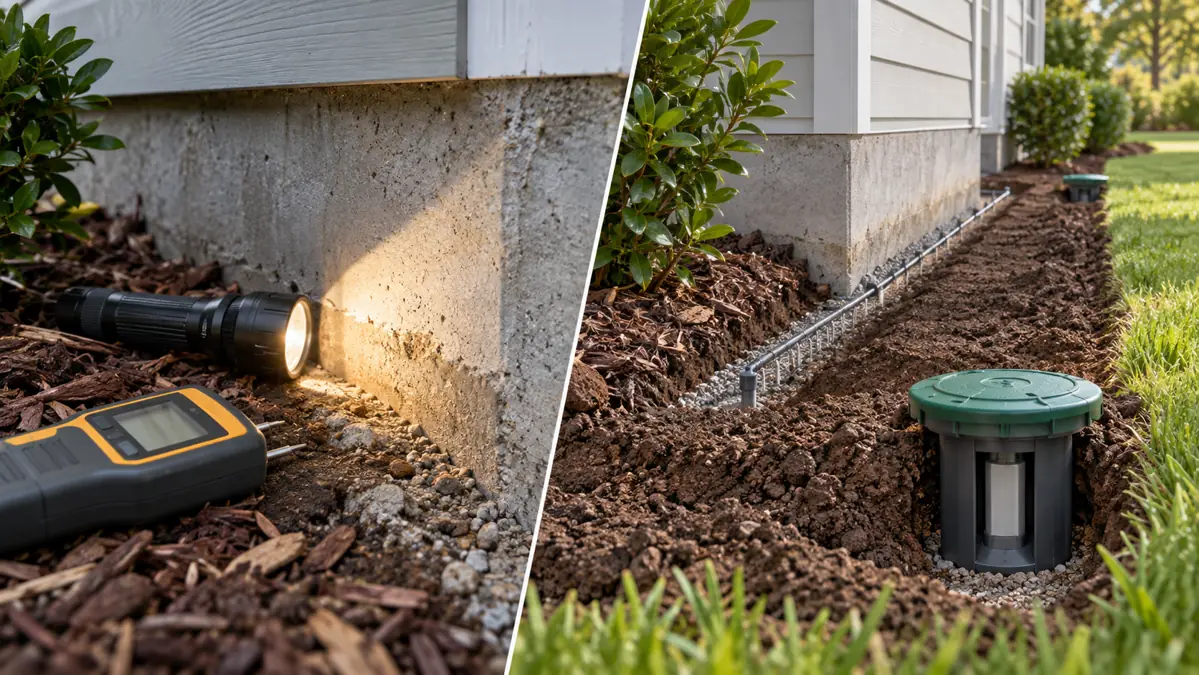
A termite inspection identifies visible evidence, access limitations, and conditions that may attract termites. Treatment is the work recommended to control an infestation or protect the structure. The inspection findings help determine whether treatment is needed and what it should cover.
Before authorizing work, ask for the findings, proposed treatment areas, follow-up arrangements, and any maintenance or repairs you need to arrange separately.
What you should learn from an inspection
The inspector evaluates accessible interior and exterior areas for active insects, mud tubes, swarm evidence, damaged wood, moisture, wood-to-soil contact, and other conducive conditions. The result should identify where evidence was found and which places could not be accessed.
An inspection may conclude that treatment is warranted, that monitoring or correction of conditions is appropriate, or that the observed insect was not a termite. Ask the inspector to distinguish confirmed findings from areas of uncertainty.
What termite treatment may involve
Subterranean-termite control can involve soil-applied liquid treatments, bait systems, targeted foam or void applications, or a combination of methods; physical barriers may also be relevant to suitable construction projects. Selection depends on termite type, foundation, construction, access, previous treatment, drainage, and label restrictions.
The proposal should state what is being treated, preparation requirements, areas excluded from the scope, follow-up, price, warranty or renewal terms, and what the homeowner must correct.
When to start with an inspection
- You found wings or swarmers but are not sure whether they are termites
- A home inspection mentioned possible wood-destroying insects
- You found moisture damage or wood deterioration without visible insects
- You are planning prevention for a property with no known active infestation
- Previous treatment records are incomplete
- You need real-estate documentation with a defined reporting purpose
Photographs are helpful, but they cannot reveal concealed structural routes or replace an on-site evaluation when evidence points to the building.
When the inspector may recommend prompt treatment
Prompt treatment may be recommended when active termites or clear current evidence is found. “Prompt” still leaves room for a written explanation. Ask whether the evidence points to native subterranean termites, Formosan subterranean termites, drywood termites, or another wood-destroying organism. Formosan termites are a type of subterranean termite, and identification can affect the inspection and control plan.
BugMan provides termite inspection and control services across Southeast Texas. The company should match its recommendation to the evidence and property rather than assuming every swarm needs the same treatment.
What treatment cannot do
Termite treatment does not repair damaged wood, stop plumbing leaks, fix drainage, or make inaccessible construction visible. Structural damage may require evaluation and repair by an appropriate building professional. Moisture and wood-to-soil contact should be corrected even when a termite treatment is performed.
Do not spray the evidence away
Household aerosol on visible termites may kill only the insects contacted and make inspection harder. Preserve the location, take photographs, and arrange an evaluation.
Which appointment do you need?
| Your situation | Best starting point | Why |
|---|---|---|
| You found wings, a mud tube, or damaged wood | Diagnostic termite inspection | The pest, location, extent, and accessible evidence must be evaluated before choosing treatment |
| You are buying or selling a home | Ask about the required real-estate report | A formal transaction document may have different scope, credentials, timing, and fees |
| A prior company already confirmed active termites | Treatment consultation with the report | The new provider still needs to verify scope, construction, access, and proposed method |
| You want prevention but see no evidence | Preventive risk inspection | Moisture, construction details, previous treatment, and local pressure shape the options |
| A treatment was completed recently | Agreement-specific follow-up | Inspection timing and covered activity depend on the treatment method and written terms |
What a treatment proposal should explain
- The observed evidence and the areas involved
- The termite type when it can be determined
- The proposed method and where it will be installed or applied
- Drilling, trenching, access, preparation, and repair responsibilities
- What is excluded from the scope
- Follow-up, renewal, warranty, retreatment, and transfer terms
- Conditions such as leaks or wood-to-soil contact that the owner must correct
Compare written scopes instead of comparing only the total price. One quote may cover a limited active area, another may propose whole-structure protection, and a third may include monitoring or renewal. Those are not equivalent purchases.
What happens between inspection and treatment
- Preserve photographs, wings, mud tubes, and the written report.
- Correct urgent leaks or safety hazards without destroying evidence unnecessarily.
- Confirm access to crawl spaces, garages, attics, utility areas, and the perimeter.
- Review the treatment diagram and ask how additions, porches, wells, drains, or inaccessible areas are handled.
- Receive preparation, re-entry, follow-up, and warranty information in writing.
- Keep the final service record with the property documents.
Do not assume a general pest-control visit includes termites. Termite work is specialized, and its agreement, inspection, treatment, and follow-up should be clearly identified.
When two inspectors recommend different work
Start by comparing their observations, not their product names. Did both inspect the same rooms and structures? Did one gain access beneath an addition that the other could not reach? Are both describing active evidence, or is one discussing preventive protection? Ask each provider to mark the evidence and inaccessible areas on the report or diagram. A difference in scope may explain a difference in recommendation without either report answering exactly the same question.
Next, ask how the proposed work addresses the finding. A useful explanation connects an observed area, a construction detail, and the planned treatment or monitoring. If a report says the evidence is inconclusive, ask what additional access or inspection would reduce that uncertainty. Do not treat “not inspected” as “no termites,” and do not treat a photograph of damaged wood as proof of the current extent throughout the building.
If you remain unsure, request clarification or an independent inspection before choosing a major treatment scope. Keep copies of both reports and disclose previous applications. This lets the next professional evaluate the same history and explain any remaining uncertainty. The goal is a recommendation you can trace to documented findings, with a clear plan for the areas that have not yet been assessed.
Frequently asked questions
Can I request an inspection without agreeing to treatment?
Ask the company how it structures inspections and estimates before scheduling. The purpose, documentation, and fee should be clear, especially for real-estate reports.
Does a swarm always mean the house needs treatment?
A swarm near or inside a structure deserves inspection, but species and origin matter. The inspector should connect the evidence to the property before recommending work.
Will termite treatment repair damage?
No. Treatment targets termite activity or risk. A qualified repair professional should evaluate structural damage separately.
Can termite treatment begin on the same day as inspection?
Sometimes, but only when the company has identified the problem, confirmed the scope, obtained authorization, and can complete the work correctly. Larger or complex structures may require a separate proposal and appointment.
Does finding old termite damage mean I need treatment?
Not automatically. Old damage, active termites, abandoned tubes, and prior treatment must be distinguished. An inspector should document the evidence and explain why current treatment or monitoring is recommended.
Should repairs happen before or after termite treatment?
The sequence depends on access, safety, moisture, active evidence, and the treatment design. Coordinate the pest professional and repair contractor so evidence and required treatment zones are not removed prematurely.
Is preventive termite treatment the same as treating an infestation?
No. The goal, scope, method, and agreement can differ. Ask the company to state whether the proposal addresses active evidence, preventive protection, or both.
Related reading
- Termite-control services
- What happens during a termite inspection
- Termite signs homeowners should know
- Request an inspection
Sources and further reading
- Texas A&M AgriLife: How to Select a Termite Control Service
- Texas A&M AgriLife: Formosan Subterranean Termites
Unsure whether you need inspection or treatment?
Share the evidence you found and any previous termite reports with BugMan. We can inspect the property and explain the recommended next step. Call (409) 333-9165 or request a free estimate.
Have a pest concern? Let’s take a look.
Request a free initial inspection.
Tell us what you’re seeing and our local team will help you choose the right next step. Serving Beaumont, Nederland, Lumberton, Buna, and surrounding Southeast Texas communities.
Prefer to call? (409) 333-9165


General Pest Control Services
Termite Treatment & Prevention
Crawfish Treatment
Rodent Control
Roach Control
Bee Removal
Mosquito Control
Flea & Tick Control
Ant & Wasp Control
Residential Pest Control
Commercial Pest Control
2026 Bug Man Pest & Termite Control © - Site by: 414 Creative


