
Roach Bombs vs. Professional Roach Treatment
Joshua Culver · October 19, 2026 · Roach Control
Foggers release pesticide broadly, but roaches hide in protected cracks. Inspection-led control targets species, harborages, food, water, and movement.
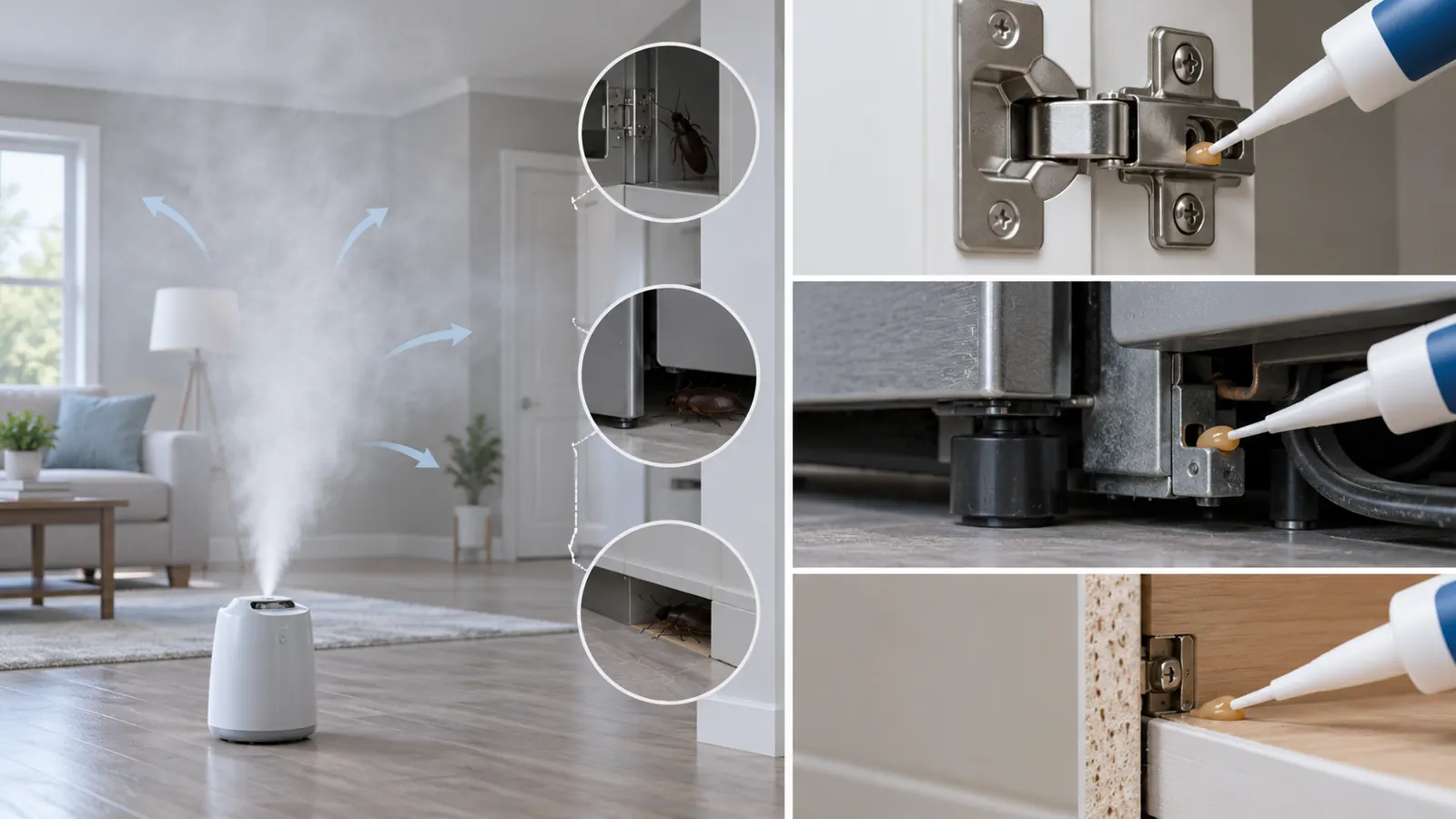
A roach bomb—also called a total-release fogger—fills open air with pesticide mist. Cockroaches often hide in narrow cabinet seams, appliance voids, plumbing chases, and wall cracks where the mist may not reach effectively. The result can be exposure to people, pets, surfaces, or ignition sources without solving the hidden infestation.
Professional treatment starts with identifying the roach and locating activity. Depending on the findings, it may include baits, targeted applications, cleaning recommendations, repairs, and follow-up monitoring. Every pesticide application still requires label-specific precautions.
What foggers are designed to do
A total-release fogger discharges its entire contents at once into a defined area. The EPA warns users to calculate room size, use no more than the label permits, remove people and pets, protect food and toys, eliminate ignition sources, leave for the required period, and ventilate as directed.
Improper use can cause illness, fire, or explosion. Do not use a total-release fogger in a closet, cabinet, or other small enclosed space. Keep it away from ignition sources and follow every label precaution.
Why foggers miss hidden roaches
German cockroaches rest in tight cracks near food, warmth, and moisture. Egg cases and protected individuals may remain in harborages. American cockroaches may be entering through drains, damp structural areas, or exterior openings. A broad room release does not identify or repair any of those sources.
In multifamily housing, roaches may move through shared plumbing and wall openings. Treating the open air in one apartment does not resolve an infestation elsewhere in the building.
Do not contaminate bait placements
Repellent sprays and cleaning products placed directly over bait can reduce feeding or remove the treatment. If you have used a fogger or aerosol, tell the technician the product, date, amount, and rooms involved.
Do not apply another product because roaches remain visible immediately after service. Follow the written expectations and callback instructions.
A better DIY starting point
- Capture a specimen or clear photo for identification.
- Remove food and water sources and clean beneath equipment.
- Reduce cardboard and dense clutter.
- Use labeled monitoring traps where children and pets cannot reach them.
- Seal suitable gaps after identifying movement routes.
- Call a professional when activity is repeated, widespread, or in shared housing.
BugMan’s roach-control service can inspect the property and design a targeted plan. Read why roaches keep returning before adding another product.
If a fogger has already been used
Follow the label’s vacancy, re-entry, and ventilation steps. If anyone was exposed, feels ill, or a fire or spill occurred, contact emergency services, Poison Control, or the appropriate medical authority. Do not re-enter early to retrieve belongings.
Never improvise with foggers
Do not use extra cans, block vents, place foggers in cabinets, or activate them near pilot lights, flames, sparks, appliances, or other ignition sources. Follow the exact label.
Foggers and professional treatment compared
| Factor | Total-release fogger | Inspection-led professional treatment |
|---|---|---|
| Placement | Disperses aerosol into exposed air and surfaces | Targets cracks, voids, routes, baits, monitors, and sources as appropriate |
| Harborage reach | May miss deep cabinet, motor, hinge, and wall-void sites | Placement follows species and evidence |
| Species identification | Usually none | Determines indoor-breeding versus outdoor-entry priorities |
| Measurement | Dead insects noticed after use | Monitor trend, life stages, rooms, and follow-up findings |
| Safety planning | User must calculate volume, ignition, vacancy, and ventilation from the label | Technician provides site-specific preparation, placement, and re-entry instructions |
| Long-term correction | Does not repair moisture, sanitation, entry, or neighboring-unit sources | Integrates corrective actions and follow-up |
What professional roach treatment should include
- Identify the cockroach species and map activity.
- Inspect food, water, heat, clutter, drains, exterior access, and shared routes.
- Place monitors and targeted control where the evidence supports it.
- Give the customer specific cleaning and preparation tasks.
- Schedule follow-up appropriate to species and severity.
- Adjust the plan from monitor counts and new evidence.
Professional does not mean indiscriminate spraying. It means the method, placement, record, and follow-up are matched to the site and pesticide label.
Compare the full cost and work involved
A useful cost comparison includes the inspection, preparation, time away from the property, cleaning instructions, follow-up visits, and any repairs assigned to you. Ask whether the quoted service covers the identified species, every affected room, and a return inspection. A low starting price gives little information if the scope ends after one application. Do not assume that a general pest plan includes an active German-roach infestation; have the company confirm that in writing.
For an apartment, establish who coordinates the work before buying products. Tell management which rooms are affected and whether sightings cluster around shared plumbing. Ask who will arrange access if the technician recommends inspecting an adjoining unit. Your own preparation can be complete while a building-level source remains unresolved; the treatment proposal should explain how that possibility will be investigated.
How to check whether roach activity is declining
Before treatment, note where you see live roaches, roughly how often, and whether they are small or large. Use the same observation routine afterward. For example, compare kitchen sightings during the same evening cleanup period rather than comparing a quick daytime glance with an hour-long nighttime search. Ask the technician which observations matter for this species and when to report them.
Keep monitor locations consistent unless the technician directs a change. Label the location and date in your notes, and record any monitor that was moved, discarded, or made unusable by water or dust. A zero count from a missing or poorly placed monitor cannot demonstrate control. Photographs of the setup can help you describe changes without disturbing treatment placements.
At follow-up, bring specific questions: Is activity concentrated in fewer places? Are new rooms involved? Were the agreed leak repairs or cleaning tasks completed? What finding would lead to a different placement or another inspection? The technician should interpret those observations alongside the treatment used. There is no single clearance date that can be promised from an article, and the number of dead roaches immediately after an application is not a complete measure of success.
Frequently asked questions
Do roach bombs kill all cockroaches?
No method should be assumed to kill every cockroach. Foggers may miss hidden harborages and do not correct food, moisture, entry, or shared-building sources.
Can I use multiple foggers in one room?
Use no more than the product label permits. The EPA warns that excessive foggers increase risk and are not a substitute for correct room-size calculation.
What if roaches appear after professional treatment?
Some activity may continue while baits and follow-up work progress. Record location and timing, leave placements undisturbed, and use the company’s callback instructions.
Do roach bombs kill roach eggs?
Do not assume they do. Egg cases may be protected in hidden harborages, and label effectiveness varies. Follow-up based on life stages and monitoring is essential.
Can I use a roach bomb in an apartment?
Foggers can affect shared spaces and create fire or exposure risks. Check the lease and management rules, follow the label, and consider professional inspection before using one.
How long must I leave after using a fogger?
Use the exact product label. Vacancy and ventilation times vary; re-entering early is unsafe.
What should I tell a professional after using a fogger?
Provide the product name, number used, rooms, date, ventilation, and any symptoms or spills. This helps the technician plan safely and interpret shifted activity.
Related reading
- Professional roach and pest control
- Why roaches keep coming back
- German versus American roaches
- Request an inspection
Sources and further reading
- U.S. EPA: Safety Precautions for Total Release Foggers
- Texas A&M AgriLife: Insects That Infest Homes
Roaches survived a fogger or spray?
Tell BugMan which products were used, when they were applied, and where roaches remain. We can inspect the activity before recommending further treatment. Call (409) 333-9165 or request a free estimate.
Have a pest concern? Let’s take a look.
Request a free initial inspection.
Tell us what you’re seeing and our local team will help you choose the right next step. Serving Beaumont, Nederland, Lumberton, Buna, and surrounding Southeast Texas communities.
Prefer to call? (409) 333-9165


General Pest Control Services
Termite Treatment & Prevention
Crawfish Treatment
Rodent Control
Roach Control
Bee Removal
Mosquito Control
Flea & Tick Control
Ant & Wasp Control
Residential Pest Control
Commercial Pest Control
2026 Bug Man Pest & Termite Control © - Site by: 414 Creative


