
Why Roaches Keep Coming Back After You Spray
Joshua Culver · October 9, 2026 · Roach Control
Visible roaches are only part of an infestation. Learn why spraying surfaces may not reach harborages or stop reinfestation.
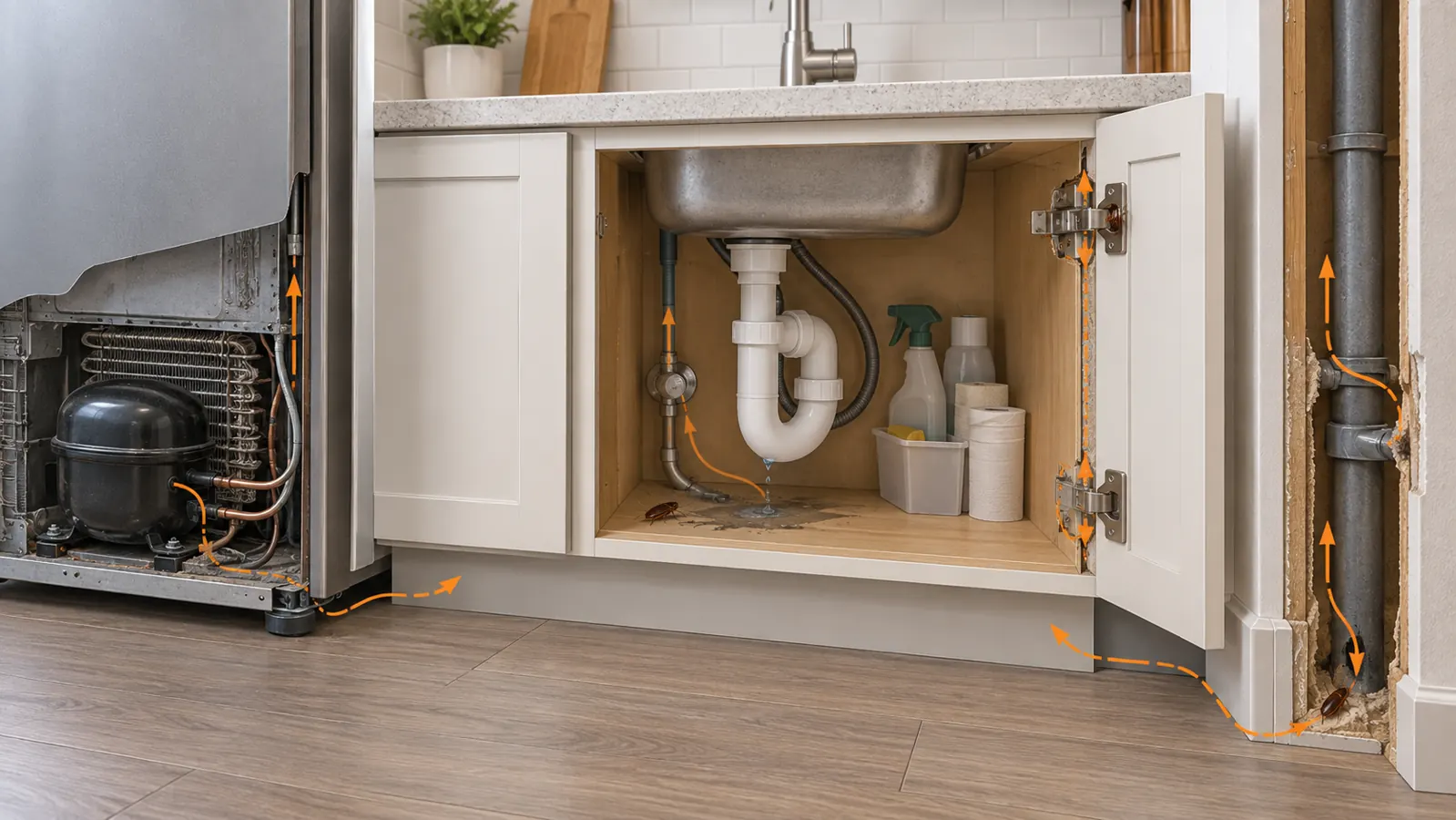
Why roaches keep coming back often has less to do with the insects you sprayed than the source you missed. Hidden cockroaches, protected egg cases, food and water, or repeated entry can keep the problem going after exposed insects die.
The recurrence can also be new activity, not survival of the exact insects you saw. Deliveries, shared walls, sewer or drain routes, door gaps, and exterior pressure can reintroduce cockroaches. Long-term control requires identification and a plan for the source, not an endless cycle of chasing sightings.
The treatment may target the wrong species
Small German cockroaches that breed indoors require a different inspection from large American cockroaches entering through damp structural or exterior routes. If you treat every roach as the same insect, you may focus on the countertop while the real issue is an appliance void, shared plumbing chase, floor drain, or exterior opening.
Capture a specimen or clear photograph and note size, markings, room, and time of day. Correct identification determines where monitors, baits, sanitation, exclusion, and follow-up should be concentrated.
Hidden roaches may have survived
Seeing a roach on an open surface means it left shelter. The larger population may remain in cracks too narrow to see. Spraying the travel surface can kill contacted insects but may not affect protected egg cases or individuals deep in harborages.
Inspection uses monitors, droppings, shed skins, egg cases, odor, and repeated sightings to map activity. Treatment then targets those zones rather than coating every available surface.
Food, water, and shelter remain available
- Grease beneath cooking equipment
- Crumbs inside cabinet seams and drawer tracks
- Pet food left out overnight
- Leaking pipes or condensation
- Cardboard, paper bags, and dense storage
- Gaps around plumbing, cabinets, and shared walls
Sanitation alone may not eliminate an established infestation, but ignoring these resources makes control slower. Clean beyond visible counters and correct water sources so baits and targeted measures have less competition.
The building is reintroducing roaches
Apartments, duplexes, restaurants, and connected commercial spaces can share plumbing, walls, ceilings, and delivery pathways. Treating one room or unit may reduce local activity while neighboring harborages remain. Management may need a coordinated inspection and repair plan.
A professional roach-control service should document activity, identify conducive conditions, and schedule follow-up based on evidence. For Beaumont properties, start with the local Beaumont pest-control page.
What lasting roach control involves
- Identify the cockroach species and map activity with inspection and monitors.
- Reduce food, water, cardboard, and clutter.
- Use targeted products according to labels and avoid contaminating baits.
- Seal suitable gaps and coordinate adjoining units when needed.
- Reinspect and adjust based on new evidence rather than repeating the same spray.
Avoid routine bug bombs
The EPA warns that total-release foggers require strict precautions and should not be treated as a simple answer. For cockroaches, hidden cracks and crevices are the central challenge.
What the pattern of sightings can tell you
| Pattern after spraying | What it may indicate | Better next step |
|---|---|---|
| Many tiny roaches in the kitchen | Indoor-breeding German roaches and surviving egg cases | Species confirmation, close monitoring, bait placement, sanitation, and follow-up |
| Large roaches after rain | Outdoor, sewer, drain, crawl-space, or roofline entry | Inspect moisture and structural routes instead of repeatedly spraying counters |
| Activity shifts to another room | Repellent exposure, disturbed harborage, or wider infestation | Map sightings and stop uncoordinated applications |
| Only nighttime sightings decline | Exposed adults were reduced while hidden stages remain | Track monitors for several life cycles |
| Roaches return after deliveries | Reintroduction in cardboard, groceries, appliances, or furniture | Inspect incoming items and reduce corrugated storage |
Seeing more activity immediately after a treatment does not always mean failure; insects may be disturbed from harborages. Persistent live nymphs, new egg cases, and unchanged monitor counts are more useful evidence than one isolated sighting.
Why mixing DIY products can make control worse
Aerosols and repellent residues can drive roaches away from bait or deeper into cracks. Foggers distribute insecticide into open air but may not penetrate the narrow harborages beside hinges, motors, pipe gaps, and wall voids. Unlabeled mixtures add exposure without solving placement.
- Stop adding products once professional service is scheduled.
- List every spray, dust, bait, fogger, or home remedy already used.
- Do not spray over gel bait or monitors.
- Remove food grease, crumbs, water, trash, and cardboard without scattering the infestation.
- Follow the technician’s cleaning and follow-up instructions.
How professional follow-up measures progress
A technician should identify species, place monitors close to likely harborages, inspect moisture and food, and document activity by room. Follow-up should compare counts and life stages, refresh or change control placements, and determine whether residents or neighboring units are reintroducing pressure.
Frequently asked questions
Does seeing dead roaches mean treatment worked?
It shows that some cockroaches contacted an effective measure, but monitors and follow-up sightings are needed to determine whether activity is declining across the infestation.
Why am I seeing roaches during the day?
Daytime activity can occur when harborages are crowded or disturbed, but one sighting is not a precise infestation count. It is a reason to inspect promptly.
Should I spray over professional bait?
No. Do not apply another product near placements unless your technician approves it. You may repel insects from the bait or create conflicting residues.
How long should roach treatment take to work?
The timeline depends on species, infestation size, product and placement, sanitation, access, and reinfestation. Ask what decline should occur by the follow-up date and what evidence would require a plan change.
Why do I see baby roaches after adults disappear?
Egg cases may have been protected from an earlier application. Nymphs can emerge later, which is why bait availability, monitoring, sanitation, and scheduled follow-up matter.
Should I remove everything from my cabinets?
Only if the service instructions say to do so. Unnecessary movement can spread roaches. Focus on food, grease, water, trash, cardboard, and the access areas identified by the technician.
Can roaches return even after successful treatment?
Yes. Deliveries, used appliances, furniture, packages, drains, exterior routes, and neighboring units can reintroduce them. Prevention and early monitoring reduce the chance that a few arrivals become an infestation.
Related reading
- Professional pest and roach control
- German versus American roaches
- Beaumont pest-control services
- Contact BugMan
Sources and further reading
Roaches returning after repeated sprays?
Tell BugMan which rooms are affected and which products you have used. An inspection can help identify hidden activity, entry routes, or conditions that keep the problem going. Call (409) 333-9165 or request a free estimate.
Have a pest concern? Let’s take a look.
Request a free initial inspection.
Tell us what you’re seeing and our local team will help you choose the right next step. Serving Beaumont, Nederland, Lumberton, Buna, and surrounding Southeast Texas communities.
Prefer to call? (409) 333-9165


General Pest Control Services
Termite Treatment & Prevention
Crawfish Treatment
Rodent Control
Roach Control
Bee Removal
Mosquito Control
Flea & Tick Control
Ant & Wasp Control
Residential Pest Control
Commercial Pest Control
2026 Bug Man Pest & Termite Control © - Site by: 414 Creative


