
Fleas vs. Bed Bugs: How to Identify the Pest
Joshua Culver · October 9, 2026 · Pest Identification
Bites can look similar and vary from person to person. Use insects, spotting, pet activity, and room patterns to identify the real pest.
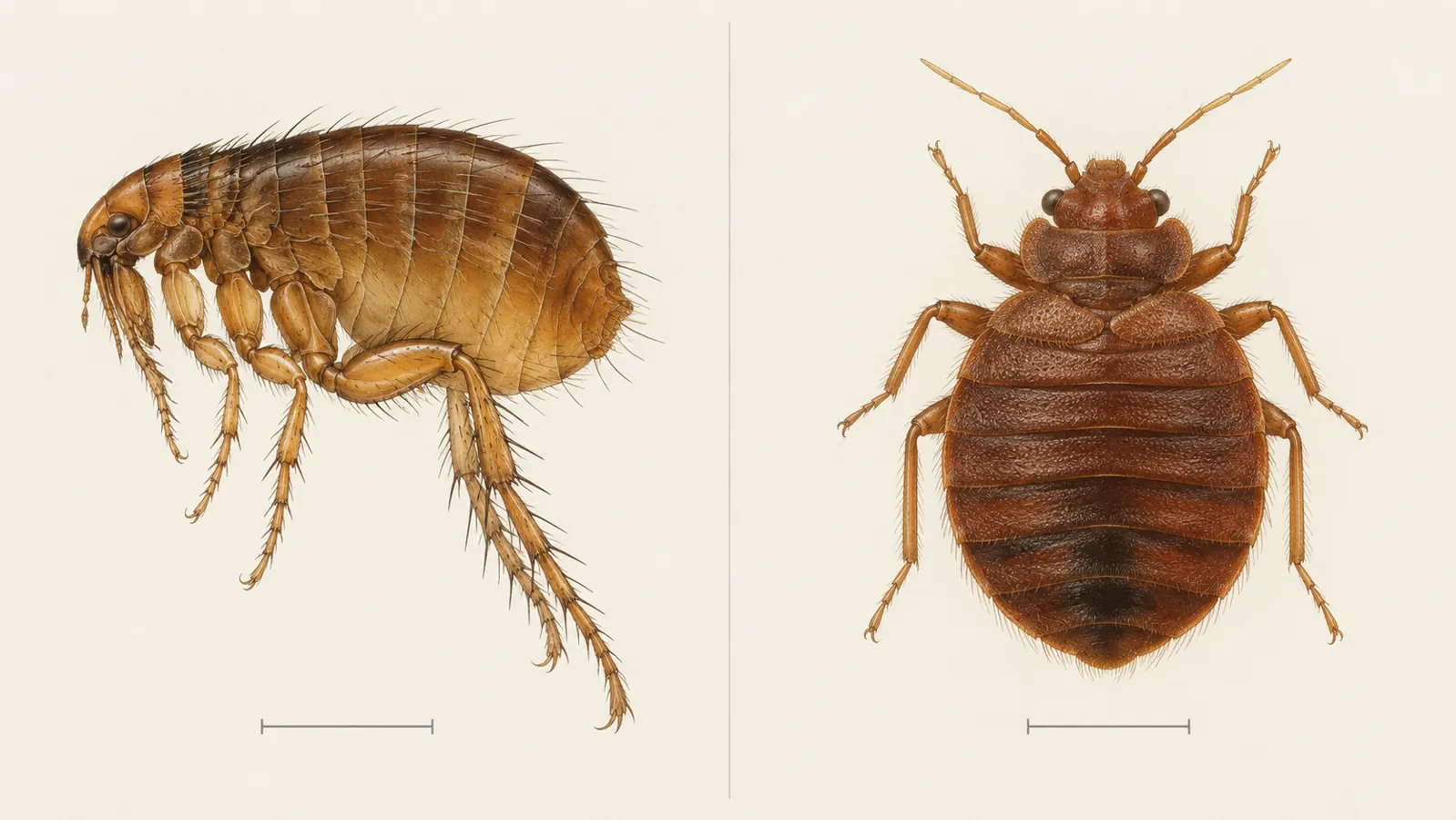
To tell fleas from bed bugs, look for the insect and its hiding places rather than relying on bites. Fleas jump and often concentrate around animal resting areas. Bed bugs crawl and commonly hide near beds and upholstered furniture. Skin reactions alone cannot confirm either pest.
Fleas are commonly connected to animals and floor-level areas, while bed bugs stay close to places where people rest for long periods. Both can persist after the first DIY attempt because immature stages and hidden locations are easy to miss.
How the insects look and move
- Adult fleas are small, dark, narrow from side to side, and built to jump.
- Adult bed bugs are flat, oval, reddish brown, and do not jump or fly.
- Flea larvae look wormlike and live in the environment rather than on the pet.
- Bed-bug eggs, shed skins, fecal spotting, and live bugs may appear in seams, cracks, or furniture joints.
A crushed specimen is harder to identify. If safe, trap the insect with clear tape or in a sealed container and photograph it beside a scale.
Where flea evidence usually concentrates
Flea activity often follows pets, wildlife, shaded outdoor resting areas, rugs, upholstered furniture, floor cracks, and bedding used by animals. Adult fleas feed on a host, while eggs and immature stages accumulate in the environment.
A home without a current pet can still have fleas after a previous animal, wildlife under the structure, visiting animals, or movement from an infested area. Treating only the animal may leave developing stages in the home or yard.
Where bed-bug evidence usually concentrates
Bed bugs commonly hide in mattress seams, bed frames, headboards, upholstered furniture, baseboards, wall penetrations, and items close to sleeping or resting areas. They can travel in luggage, furniture, bags, and personal belongings.
They are not caused by poor hygiene. Excess clutter creates more hiding places and makes inspection harder, but a clean hotel, apartment, or home can still receive bed bugs.
Why the bite pattern is not enough
Online pictures often promise a diagnosis based on a line, cluster, ankle location, or time of day. Those clues may guide inspection, but they are not conclusive. People in the same room can react differently, and some show no obvious marks.
Seek medical advice for severe swelling, infection, trouble breathing, or unexplained recurring skin symptoms. A pest professional identifies environmental evidence; a clinician addresses the skin reaction.
Save a specimen
A sealed specimen or sharp photo of the insect and the exact discovery location is more valuable than a close-up photo of a bite.
Flea and bed-bug evidence compared
| Clue | Fleas | Bed bugs |
|---|---|---|
| Typical movement | Jump quickly; adults move through pet and floor-level zones | Crawl; hide near resting areas and transported belongings |
| Common evidence | Flea dirt, eggs or larvae in pet bedding, live jumping adults | Dark spotting, cast skins, eggs, live bugs, clustered harborage |
| Likely concentration | Pet bedding, rugs, upholstered furniture, shaded animal areas | Mattress seams, bed frame, headboard, furniture joints, baseboards |
| Host history | Pets, wildlife, stray animals, rodents, or former animal occupancy | Travel, visitors, used furniture, shared walls, moved belongings |
| Bite pattern | Often lower legs or exposed areas, but variable | Often noticed after sleeping, but variable and not diagnostic |
How to collect useful evidence
- Capture the insect with clear tape or a sealed container if it can be done safely.
- Photograph the insect beside a ruler and preserve the original image.
- Inspect pet bedding, mattress seams, bed frames, upholstered furniture, and floor edges with a flashlight.
- Do not deliberately expose your skin to bites to test for fleas; have a professional inspect suspected areas.
- Ask a veterinarian to evaluate pets and coordinate environmental treatment.
- Do not carry mattresses, bedding, or furniture into another room.
Vacuum evidence only after documenting it. Dispose of the vacuum contents according to professional guidance so insects are not released into another area.
Why fleas and bed bugs need different treatment
Flea control typically coordinates veterinary care, frequent vacuuming, laundering, indoor development sites, and outdoor animal-resting zones. Bed-bug control maps the infestation around sleeping and resting areas, handles belongings carefully, and may use heat, targeted pesticides, encasements, and monitoring.
Treating the yard alone will not solve bed bugs, and treating only the mattress will not solve a flea population developing around pets and floor-level environments. Correct identification prevents wasted treatment and accidental spread.
What if you cannot find an insect?
An inspection can be useful even when you do not have a specimen, but it should begin with a clear history. Note which rooms are involved, when the concern began, where pets rest, and any recent travel, visitors, used furniture, or change in occupancy. Report observations separately from guesses. “I found dark specks on the bed frame” gives the inspector something to examine; “the bites look like bed bugs” does not identify their source.
Ask the professional which evidence would support the next step and which areas should be monitored. If no pest is found, request an explanation of what was inspected and any limitations. That result is different from a guarantee that no insect exists anywhere. It also does not justify applying a flea or bed-bug product just to see whether symptoms improve.
Keep environmental investigation separate from medical questions. An insect identification cannot diagnose every skin mark, and a negative pest inspection cannot explain recurring symptoms. Continue any appropriate clinical evaluation while following the agreed monitoring plan. Avoid repeatedly disturbing furniture or moving your sleeping area as a way to run your own experiment.
Frequently asked questions
Do flea bites always appear around the ankles?
Fleas are often encountered near floor level, but bite location alone is not diagnostic. Inspect for fleas, flea dirt, pet activity, and environmental evidence.
Can bed bugs jump?
No. Bed bugs crawl. A small insect that jumps is more consistent with a flea or another jumping arthropod, but a specimen should still be identified.
Can I have fleas and bed bugs at the same time?
Yes. Finding one pest does not rule out another. Inspect each evidence pattern and avoid assuming every bite has one source.
Can fleas live in a home without pets?
Yes. Fleas can persist after an animal leaves, emerge from protected pupae, or be associated with rodents, wildlife, visitors, or previous occupants. The source still needs to be identified.
Will washing all bedding identify the pest?
No. Laundering can be part of control but does not confirm species or reach every hiding place. Document evidence first and contain items so you do not spread insects.
Should my pet be treated if the problem is bed bugs?
Bed bugs are not controlled by routine flea treatment on a pet. Ask a veterinarian about any animal-health concern and use a pest professional for the building.
Related reading
- BugMan pest-control services
- Bed-bug heat treatment guide
- How to prepare for pest control
- Request an inspection
Sources and further reading
Not sure whether you have fleas or bed bugs?
Share a clear insect photograph and describe where it was found. BugMan can inspect the property and help determine which pest-control service fits the evidence. Call (409) 333-9165 or request a free estimate.
Have a pest concern? Let’s take a look.
Request a free initial inspection.
Tell us what you’re seeing and our local team will help you choose the right next step. Serving Beaumont, Nederland, Lumberton, Buna, and surrounding Southeast Texas communities.
Prefer to call? (409) 333-9165


General Pest Control Services
Termite Treatment & Prevention
Crawfish Treatment
Rodent Control
Roach Control
Bee Removal
Mosquito Control
Flea & Tick Control
Ant & Wasp Control
Residential Pest Control
Commercial Pest Control
2026 Bug Man Pest & Termite Control © - Site by: 414 Creative


