
Southeast Texas Seasonal Pest Calendar
Joshua Culver · October 19, 2026 · Seasonal Pest Control
A practical planning calendar for the pest patterns Southeast Texas homes and businesses may see as weather, rain, and property use change.
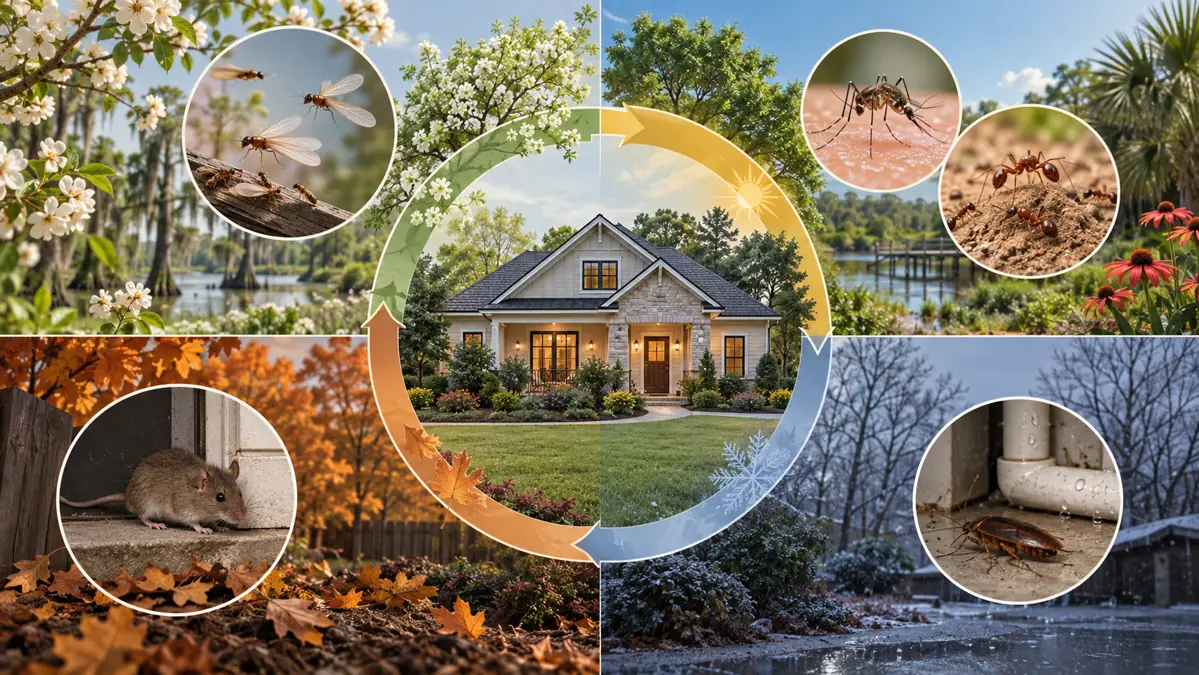
This Southeast Texas pest calendar helps homeowners plan inspections and maintenance through the year. There is no single pest season followed by a pest-free winter. Warm indoor spaces support cockroaches and rodents year-round, while rainfall, humidity, temperature, storms, and mild winters shift outdoor pressure. Use this calendar as a planning guide, not a prediction that every pest will appear in every month.
The best time to prevent an infestation is before the peak. Inspect screens and seals, correct moisture, reduce breeding sites, and schedule specialized inspection when evidence appears.
January through March: exclusion and early preparation
Cool or wet periods can move rodents, roaches, and occasional invaders toward shelter. Inspect attic, garage, crawl-space, door, vent, and utility openings. Review food, feed, bird seed, and waste storage.
As temperatures warm, ants and mosquitoes can become more visible. Clean gutters, empty containers, repair drainage, and inspect stored outdoor items before rain turns them into breeding sites.
April through June: watch for termite swarms and mosquitoes
Spring warmth and moisture can bring termite swarms. Preserve insects and wings, record time and location, and arrange an inspection rather than spraying the evidence away. Formosan swarms often draw attention around lights at night.
Mosquito pressure rises with standing water and vegetation. At least weekly, empty and scrub birdbaths and other water-holding containers, inspect gutters, and address drainage problems; check again after rain. Fire ants may build visible mounds after favorable weather.
July through September: heat, rain, and outdoor pressure
Mosquitoes, fleas, ticks, ants, wasps, and outdoor cockroaches can remain active. Focus on shaded pet areas, outdoor dining, vegetation, drains, dumpsters, and water. Storms and heavy rain can displace pests or reveal roof and drainage defects.
Commercial and multifamily properties should review complaints, deliveries, waste areas, and monitor trends before holiday or event traffic changes operations.
October through December: prevent indoor movement
As nights cool, rodents and other pests look for shelter. Inspect door sweeps, garage corners, roof returns, vents, and stored holiday boxes before bringing them inside. Move firewood and dense storage away from the structure.
Cockroaches and bed bugs do not follow a simple outdoor season. Travel, guests, deliveries, used furniture, warmth, and shared walls can maintain risk throughout the year.
Year-round monthly habits
- Inspect for leaks, condensation, and standing water
- Keep food, feed, and garbage sealed
- Reduce cardboard and floor-level clutter
- Check screens, sweeps, vents, rooflines, and utility gaps
- Photograph and identify pests before treatment
- Keep service, warranty, and repair records
Use BugMan’s Southeast Texas service-area page to find local coverage, and review the full service list when a seasonal inspection finds evidence.
When to act immediately
- Interior termite swarmers or fresh mud tubes
- Damaged or exposed wiring associated with rodents
- A sting causing a severe allergic reaction requires emergency medical attention, not a pest-control appointment
- Widespread bed-bug or cockroach evidence
- Rodent contamination in occupied or food areas
- A wasp or bee nest in a high-contact location
Weather changes the schedule
After flooding, hurricanes, construction, extended rain, or unusual warmth, inspect sooner than the calendar suggests. Property evidence always outranks the month.
A month-by-month planning calendar
| Period | Likely pressure to watch | Property work |
|---|---|---|
| January–February | Rodents, overwintering insects, occasional warm-weather activity | Inspect attics, doors, garages, stored food, roof and utility gaps |
| March–April | Termite swarms, ants, mosquitoes after rain | Preserve swarmers, clear drainage, inspect standing water, begin yard monitoring |
| May–June | Mosquitoes, fire ants, fleas, ticks, roaches | Manage water and vegetation; coordinate pet and yard protection |
| July–August | Heat- and moisture-driven roaches, mosquitoes, ants | Repair leaks, check drains and irrigation, inspect shaded harborage |
| September–October | Storm-driven entry, rodents, mosquitoes, outdoor invaders | Reinspect roof, soffits, screens, doors, drainage, and contractor repairs |
| November–December | Rodents seeking shelter, pantry and stored-item pests | Seal confirmed routes, inspect holiday storage, protect food and feed |
What to do after a major weather change
- After heavy rain: empty water, inspect drainage, watch ants, mosquitoes, and large roaches
- After drought or heat: inspect indoor water sources, drains, pet areas, and irrigation
- After a tropical storm: check roof, soffit, screen, door, siding, and utility damage
- After a cold snap: inspect attic, garage, crawl-space, and food-storage evidence
- After landscaping: check mulch depth, vegetation contact, irrigation, and disturbed ant colonies
- After construction: inspect new penetrations, materials, dumpsters, and altered drainage
Record the date of weather or building change and the first pest evidence. The timeline helps an inspector distinguish a seasonal arrival from an established indoor infestation.
Match seasonal work to the pest
Spring termite awareness should focus on preserving swarm evidence and arranging inspection. Summer mosquito work should include weekly source reduction. Rodent prevention should coordinate removal and exclusion. Roach and ant plans should begin with species and source. Each season calls for a different decision.
Hurricane and tropical-storm preparation deserves its own line in the property calendar. Before severe weather, secure containers that can collect water and protect food and pet feed. Afterward, inspect damaged screens, doors, soffits, roof edges, drainage, debris piles, displaced firewood, and contractor penetrations. Do not enter floodwater, unstable structures, or electrical hazards to perform a pest check.
A calendar is most valuable when it triggers property maintenance before pests appear and prompt inspection when evidence changes.
Add reminders for your own property
Add three kinds of reminders to your own calendar: recurring maintenance, known property events, and follow-up from actual findings. Recurring maintenance might include the weekly standing-water walk already described above. Property events include a roof replacement, a tenant move, deliveries of stored materials, or reopening a room after a long absence. Follow-up belongs on the date agreed with the technician rather than waiting for the next season.
Use last year’s records to choose the areas worth checking first. If a garage corner repeatedly showed rodent evidence, add a photograph of that location to the reminder. If an irrigation leak coincided with recurring ants, schedule a check of the repaired line when irrigation use increases. The useful question is what changed at your property, not whether the current month is supposed to have pests.
Before travel or a seasonal shutdown, assign someone to handle time-sensitive maintenance and report new findings. On return, review leaks, food storage, deliveries, and any rooms that were closed. Keep the calendar flexible: a new indoor infestation needs a response when it appears, even if your next routine appointment is weeks away. Record the outcome so next year’s reminders become more accurate instead of simply repeating the same dates.
Frequently asked questions
What is the worst pest month in Southeast Texas?
There is no single worst month for every pest. Termite swarms, mosquitoes, ants, rodents, and indoor pests respond to different conditions.
Should I stop pest control in winter?
Not automatically. Review current activity, indoor risk, exclusion, and contract terms. Some properties need year-round monitoring.
How soon after heavy rain should I inspect the yard?
Inspect once it is safe, then repeat as containers, low spots, gutters, and vegetation change. Remove standing water promptly where practical.
When do termites swarm in Texas?
Many subterranean termites swarm during warm, humid conditions, often after rain, but timing varies by species and site. Save specimens and arrange an inspection whenever a swarm occurs in or near the structure.
Do rodents only enter homes in winter?
No. Weather changes, storms, food, water, construction, and habitat disturbance can drive entry throughout the year.
Should pest control be scheduled automatically every season?
A recurring inspection plan can be useful, but treatment should be based on the pest, property, evidence, method, and label rather than a generic seasonal application.
Related reading
Sources and further reading
Seeing a change in pest activity?
Tell BugMan what appeared, where you found it, and whether recent weather or building work changed the property. We can help identify the appropriate service. Call (409) 333-9165 or request a free estimate.
Have a pest concern? Let’s take a look.
Request a free initial inspection.
Tell us what you’re seeing and our local team will help you choose the right next step. Serving Beaumont, Nederland, Lumberton, Buna, and surrounding Southeast Texas communities.
Prefer to call? (409) 333-9165


General Pest Control Services
Termite Treatment & Prevention
Crawfish Treatment
Rodent Control
Roach Control
Bee Removal
Mosquito Control
Flea & Tick Control
Ant & Wasp Control
Residential Pest Control
Commercial Pest Control
2026 Bug Man Pest & Termite Control © - Site by: 414 Creative


