
Commercial Pest Control Checklist for Southeast Texas
Joshua Culver · October 9, 2026 · Commercial Pest Control
A practical inspection checklist for restaurants, offices, warehouses, retail, hospitality, and managed properties in Southeast Texas.
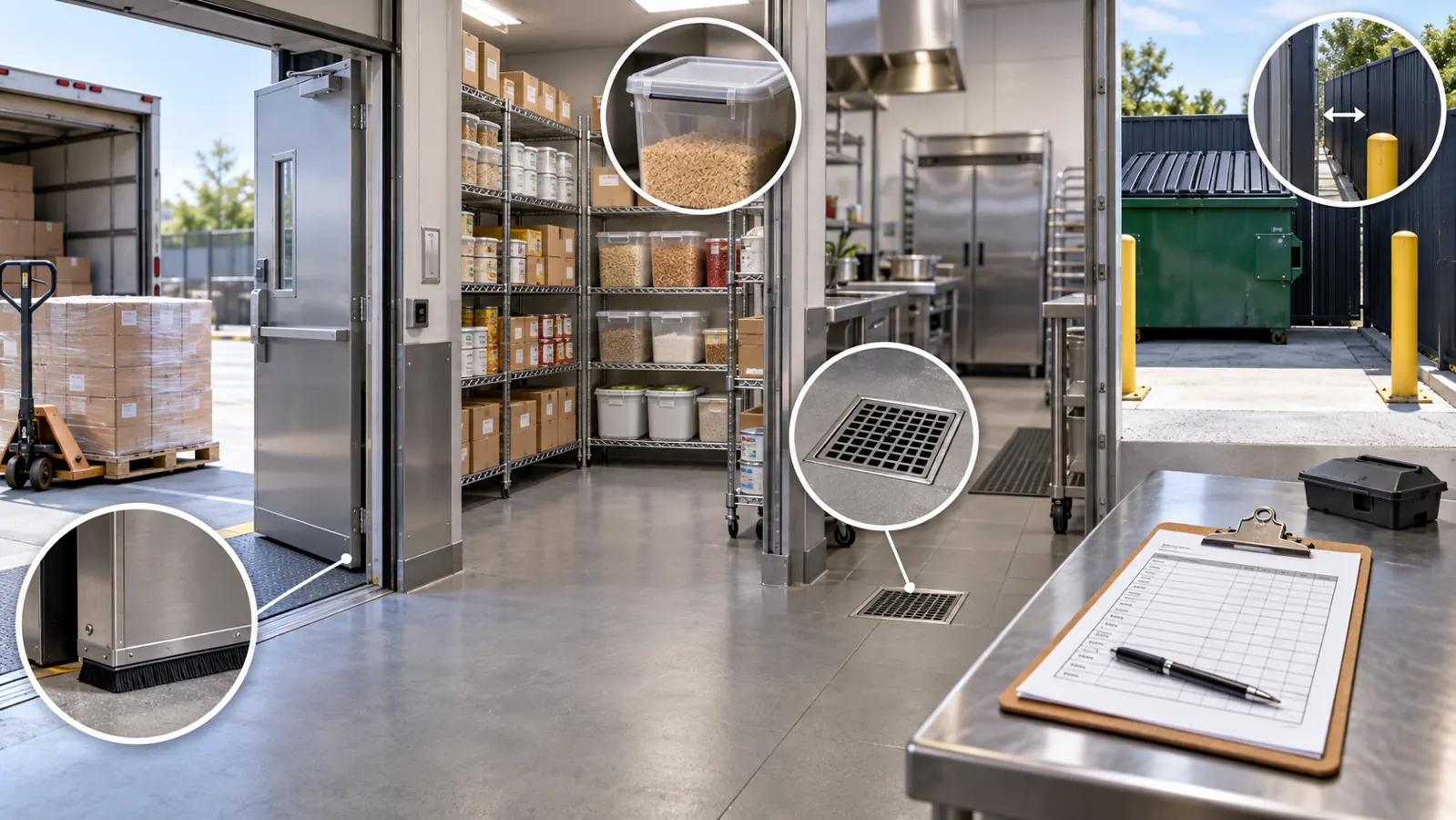
This commercial pest control checklist helps Southeast Texas businesses inspect receiving, waste, food areas, storage, moisture and building entry points. Use it to record the finding, assign a responsible person and set a follow-up date between professional visits.
Use this checklist between professional visits. It does not replace industry-specific sanitation, health-code, food-safety, lease, or regulatory requirements; it helps the facility team find conditions before they become repeat service calls.
Exterior walls, doors, and roof
- Doors close fully and sweeps contact the threshold
- Dock plates, roll-up doors, and garage corners have no major gaps
- Vents and penetrations have appropriate screening or seals
- Vegetation and stored materials permit foundation inspection
- Exterior lighting and waste areas are managed to reduce attraction
- Roof, gutter, condensate, and drainage problems are reported
Record defects with a photo, location, owner, and due date. A recommendation without responsibility or timing often remains open until the next infestation.
Receiving and deliveries
- Inspect pallets, cardboard, produce, equipment, and returned goods before storage.
- Move suspect items to a defined inspection area.
- Rotate inventory and remove damaged packaging.
- Avoid storing cardboard directly on floors or tight against walls.
- Clean spills immediately and document pest evidence from vendors.
German cockroaches, stored-product pests, rodents, and bed bugs can arrive with goods or equipment. Inspect incoming goods and record pest evidence before moving affected items into storage.
Food, waste, and moisture
- Clean beneath and behind equipment
- Keep drains maintained and report backups
- Repair leaks and condensation
- Close ingredient, pet-food, feed, and waste containers
- Clean dumpsters and keep lids and doors functional
- Remove standing water and wet organic debris
Sanitation records should identify recurring hard-to-clean areas. If the same grease, food, or moisture returns after every visit, treatment alone will not provide durable control.
Storage, offices, and employee areas
Pests do not respect departmental boundaries. Break-room crumbs, personal food in desks, locker clutter, cardboard archives, indoor plants, and unreported leaks can undermine a clean production or customer area.
Create a simple reporting route so staff can submit a photo and exact location without embarrassment. Discourage unapproved aerosols and plug-in devices that hide evidence or conflict with the professional program.
Monitoring and documentation
- Maintain a current site map for monitors, traps, and high-risk areas.
- Record pest, count, condition, and corrective action by date.
- Trend repeated findings instead of reviewing each service ticket alone.
- Close structural and sanitation actions with proof.
- Review vendor, neighboring-tenant, construction, and weather changes.
Check BugMan’s Southeast Texas service areas and discuss the needs of your facility with the team. The plan should define inspection frequency, response thresholds, records, and responsibility.
Questions for the service review
- Where is activity increasing or decreasing?
- Which monitors require repositioning?
- What source or route is most likely?
- Which corrective action remains overdue?
- Did a delivery, leak, construction project, or tenant change alter risk?
- Does the service frequency still match the evidence?
Assign every correction
Each recommendation needs a named owner and target date. Pest-control records are useful only when operations, maintenance, sanitation, and management act on them.
What to check in each part of the business
| Zone | Inspect for | Records to review |
|---|---|---|
| Receiving and loading | Pallets, cardboard, dock gaps, spills, door discipline | Delivery schedule, rejected goods, pest sightings |
| Food or break areas | Grease, crumbs, drains, appliances, storage, condensation | Cleaning, temperature, maintenance, monitor trend |
| Mechanical and utility | Pipe gaps, leaks, floor drains, heat, standing water | Work orders and recurring equipment faults |
| Waste and exterior | Dumpster condition, vegetation, lighting, drainage, burrows | Pickup schedule, landscaping, pressure-washing |
| Office, storage, and sales floor | Packages, plants, lockers, wall and ceiling routes | Employee reports and stock movement |
| Roof and upper structure | Ponding water, bird or rodent routes, penetrations, HVAC | Roof, pest, and contractor service history |
The inspection should follow product and people flow from delivery to storage, use, waste, and departure. Pests exploit repeated operational patterns; a device map without understanding the operation produces weak recommendations.
What a useful commercial service report contains
- Date, technician, site, and areas accessed
- Target pest and evidence—not only treatment performed
- Monitor or device identification and trend
- Corrective action with exact location, owner, and due date
- Product or method record where applicable
- Sanitation, exclusion, drainage, or repair photographs
- Escalation threshold and next review date
A list of open recommendations is not enough. Assign each issue to pest provider, site manager, maintenance, janitorial, landscaping, roofing, plumbing, or another responsible party. Close the item only after repair and verification.
Choose a schedule for the facility’s needs
Food, healthcare, childcare, hospitality, warehousing, manufacturing, office, and retail sites have different pest pathways and tolerance. Service frequency should reflect monitoring results, regulation or customer standards, season, neighboring pressure, operating hours, and corrective-action performance.
Create an escalation matrix before the first visit. One stored-product insect in a monitor, a live rodent in a food area, bed-bug evidence in a hotel room, and fire ants beside a childcare playground do not carry the same response. Define who is notified, which area is restricted, what evidence is preserved, and when outside maintenance or management must act.
Ask how after-hours access, locked areas, sensitive equipment, employee sightings, and emergency response are handled. Define what is urgent and who has authority to act before a crisis occurs.
Keep pest reports consistent across shifts
Give staff a short, consistent sighting format: date and time, exact area, what was seen, photograph if safely available, and the person notified. “Mouse near receiving door 2 at opening” is more useful than “pests in warehouse.” Keep the reporting route easy to find for temporary staff and night shifts. Staff should report observations without trying to diagnose the infestation or move professional devices.
Use one shared record for the site rather than separate informal messages to several managers. Before each service, the designated contact should summarize new reports and changes in operations. Include missed access, unusual deliveries, construction, water incidents, and changes in waste pickup. A technician arriving during quiet daytime hours may otherwise miss the operating pattern that explains overnight activity.
Frequently asked questions
Can employees use store-bought spray?
Uncoordinated products can create exposure, contaminate areas, move pests, and interfere with baits or monitoring. Route sightings through the approved program.
What records should a commercial program keep?
Keep service reports, site maps, monitor findings, product and treatment information, corrective actions, training, complaints, and follow-up documentation appropriate to the facility.
How often should a commercial property receive pest service?
It depends on risk, pest history, monitoring, facility type, standards, and corrective-action performance. Monthly is common in higher-risk settings, but the inspection and trend should justify the cadence.
What records should be ready for an audit?
Requirements vary, but commonly include licenses or credentials, service logs, device maps, product records, pest-sighting logs, trends, corrective actions, and proof that open issues were closed.
Does commercial pest control include emergency response?
Only if the agreement says so. Define covered pests, contact process, response window, after-hours access, exclusions, and fees.
Who should receive the pest-control report?
At minimum, the site contact and the people responsible for maintenance, sanitation, and operations should receive actionable findings. Sensitive records should follow company policy.
Related reading
- Southeast Texas service areas
- All BugMan services
- Monthly vs. quarterly pest control
- Request a commercial assessment
Sources and further reading
Discuss pest control for your business
Tell BugMan the facility type, operating hours, affected areas, and documentation you need. We can discuss inspection, access, and follow-up arrangements. Call (409) 333-9165 or request a free estimate.
Have a pest concern? Let’s take a look.
Request a free initial inspection.
Tell us what you’re seeing and our local team will help you choose the right next step. Serving Beaumont, Nederland, Lumberton, Buna, and surrounding Southeast Texas communities.
Prefer to call? (409) 333-9165


General Pest Control Services
Termite Treatment & Prevention
Crawfish Treatment
Rodent Control
Roach Control
Bee Removal
Mosquito Control
Flea & Tick Control
Ant & Wasp Control
Residential Pest Control
Commercial Pest Control
2026 Bug Man Pest & Termite Control © - Site by: 414 Creative


