
Common Rodent Entry Points Around Southeast Texas Homes
Joshua Culver · October 9, 2026 · Rodent Control
A room-by-room and exterior guide to the openings rats and mice commonly exploit around Southeast Texas homes.
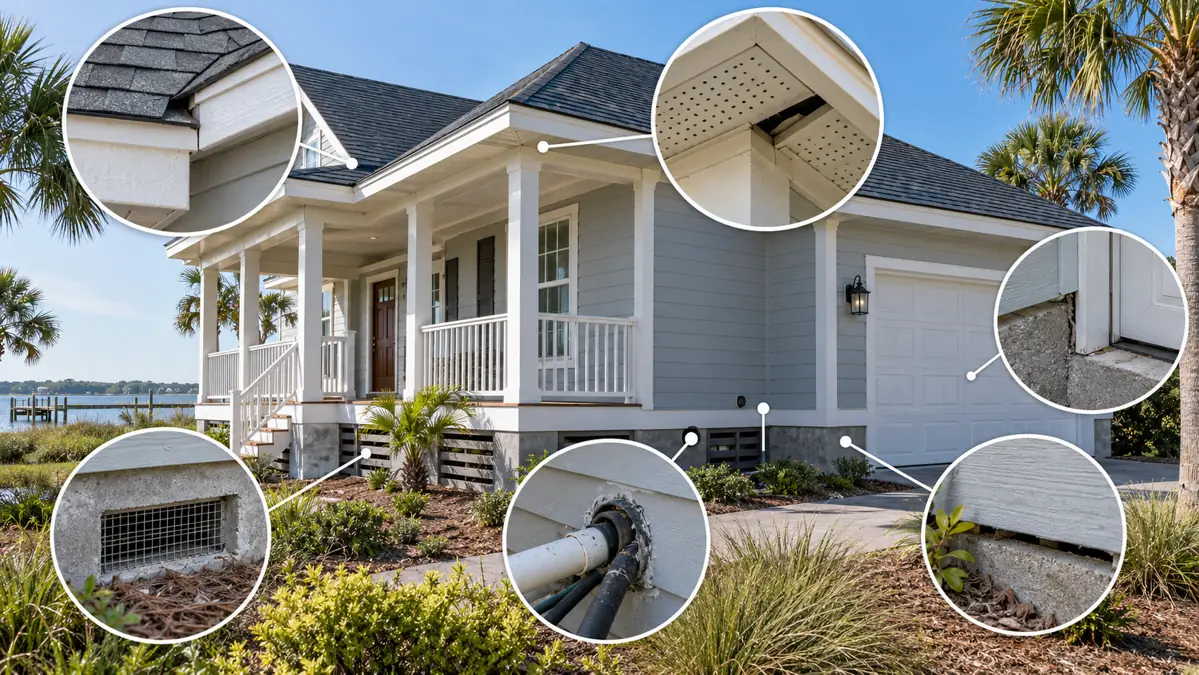
Common rodent entry points include garage-door corners, utility penetrations, crawl-space vents and damaged soffits. The entrance may be far from the room with droppings because rats and mice travel through hidden building spaces.
A complete inspection moves from exterior access to interior evidence, then back again. It also separates openings that should be sealed from vents, drains, and construction features that must continue to function.
Roofline and upper-wall gaps
- Soffit and fascia damage
- Open roof returns and construction gaps
- Damaged gable, turbine, and roof-vent screening
- Gaps around chimneys and roof penetrations
- Loose siding or trim
- Tree limbs, vines, or structures that provide roof access
Upper openings are easy to miss from the ground. Look for rub marks, nesting debris, gnawing, droppings, and repeated sounds, but use safe access and qualified repair help.
Garage and door openings
Garage doors commonly leave gaps at the lower corners, especially when tracks, seals, or slabs are uneven. Side doors with worn sweeps and doors left open during evening hours add opportunity. Stored feed, pet food, grass seed, and cardboard make the garage attractive after entry.
A new seal must fit the door and surface without interfering with safe operation or drainage. Check corners after installation instead of assuming a straight bottom seal closes every route.
Utility and mechanical penetrations
- Air-conditioning lines
- Water, gas, and drain pipes
- Cable and electrical conduits
- Dryer, bathroom, and kitchen vents
- Condensate drains
- Openings beneath sinks and behind appliances
The visible interior gap may connect to a larger wall or exterior opening. Seal materials must be compatible with heat, moisture, movement, and code requirements. Do not pack combustible material around hot equipment.
Foundation and crawl-space access
Damaged crawl-space doors, foundation vents, gaps at piers, plumbing routes, and eroded areas can provide entry. Vegetation and stored materials may conceal these defects. Moist crawl spaces also support insects and deterioration that complicate rodent work.
Avoid closing required vents or drainage paths. Repairs should exclude rodents while preserving the building’s intended ventilation and moisture management.
Exterior conditions that increase pressure
- Move firewood and dense stored materials away from the structure.
- Keep garbage and feed containers closed and clean.
- Trim vegetation to permit inspection and reduce concealed travel.
- Repair water leaks and manage standing water.
- Remove fallen fruit and clean outdoor cooking areas.
- Coordinate humane wildlife exclusion from attics, crawl spaces, and sheds.
BugMan’s rodent-control service can identify active routes and prioritize repairs instead of producing an unranked list of every cosmetic crack.
Coordinate removal before closing active routes
Confirm activity, reduce the rodent population, and seal routes in a coordinated plan. If every known exit is closed while animals remain inside, they may die in voids or create new damage. Monitoring after repair checks whether the exclusion worked.
Do not ignore damaged wiring
Rodent gnawing can create an electrical hazard. Keep away from damaged conductors and use a qualified electrician for inspection and repair.
Inspect the building from low to high
| Building zone | Common entry details | Evidence nearby |
|---|---|---|
| Foundation and crawl space | Vents, plumbing, damaged screens, piers, sill gaps | Burrows, rub marks, droppings, gnawing, disturbed insulation |
| Doors and garage | Corner gaps, worn sweeps, tracks, thresholds | Droppings, food damage, nesting material, tracks |
| Utilities | Cable, electrical, gas, water, condensate, and refrigerant penetrations | Grease marks, debris, chewed sealant |
| Siding and masonry | Loose panels, damaged trim, brick transitions, expansion gaps | Dark marks, sheltered runways, vegetation contact |
| Roof and attic | Soffits, fascia, vents, returns, flashing, eaves | Droppings, gnawing, trails in insulation, daylight |
| Attached structures | Porches, carports, additions, decks, sheds | Hidden transitions and multiple construction styles |
Complete the inspection in daylight and again near dusk when safe. One person can observe the roofline while another checks interior light gaps, but no one should climb, enter an unsafe attic, or disturb electrical equipment without proper training.
Match the repair to the opening
Door sweeps should contact the threshold without preventing safe operation. Vent covers must resist gnawing without blocking airflow. Utility penetrations need durable materials compatible with the pipe, cable, wall, and fire requirements. Roof repairs should preserve drainage and ventilation.
- Use metal flashing or appropriate mesh where the building detail permits
- Repair rotten wood and broken siding before sealing
- Protect crawl-space vents while maintaining required air movement
- Trim vegetation that provides roof or wall access
- Store pet food, bird seed, and livestock feed in resistant containers
- Reinspect repairs after storms and contractor work
Keep a record of each repaired opening
Number or photograph each opening, mark whether it is active, and record the repair. This prevents crews from missing secondary gaps and gives the follow-up inspection a baseline. It also separates pest-control work from roofing, electrical, plumbing, HVAC, or structural repairs that require another trade.
Document both sides when possible. A pipe gap behind a kitchen cabinet may connect to a crawl space opening several feet away, and a soffit defect may lead into an attic route far from the room where noise is heard. Linking exterior and interior photographs helps the repair crew close the actual pathway rather than patching only the visible endpoint.
The final verification should include fresh-evidence monitoring, not just a visual check of new material. A building can look sealed while animals remain inside or use an unrecognized route.
Frequently asked questions
Should every exterior hole be filled?
No. Some openings provide required ventilation or drainage. Use rodent-resistant screens or building-appropriate repairs without blocking intended functions.
Can rats enter from the roof?
Yes. Roof rats and other rodents can use trees, fences, vines, and attached structures to reach roofline gaps.
How do I know whether exclusion worked?
Monitor for fresh droppings, sounds, gnawing, tracks, and trap activity after repairs. Reinspect weathered or disturbed materials.
Should every gap be sealed with steel wool?
No. Loose material can rust, shift, create sharp edges, or be inappropriate around utilities. Use a durable repair suited to the exact building component and code requirements.
Who repairs rodent-damaged wiring or roof components?
A qualified electrician should handle wiring and a suitable building professional should repair roof or structural damage. Coordinate those repairs with the rodent-removal and exclusion sequence.
How soon should exclusion be checked?
The first follow-up should match the trapping and removal plan. Reinspect again after severe weather, roof or utility work, and any return of fresh evidence.
Related reading
- Rodent-control service
- Prepare for a pest-control inspection
- Signs of rodents in attics and walls
- Request a rodent inspection
Sources and further reading
Have you found a possible rodent entry point?
Send BugMan photographs of accessible openings and describe the signs inside. We can inspect the likely routes and identify repairs that may need another trade. Call (409) 333-9165 or request a free estimate.
Have a pest concern? Let’s take a look.
Request a free initial inspection.
Tell us what you’re seeing and our local team will help you choose the right next step. Serving Beaumont, Nederland, Lumberton, Buna, and surrounding Southeast Texas communities.
Prefer to call? (409) 333-9165


General Pest Control Services
Termite Treatment & Prevention
Crawfish Treatment
Rodent Control
Roach Control
Bee Removal
Mosquito Control
Flea & Tick Control
Ant & Wasp Control
Residential Pest Control
Commercial Pest Control
2026 Bug Man Pest & Termite Control © - Site by: 414 Creative


