
7 Signs of Rodents in Your House, Attic or Walls
Joshua Culver · October 9, 2026 · Rodent Control
Scratching is only one clue. Learn how droppings, gnaw marks, odors, nesting material, and entry points reveal rodent activity.
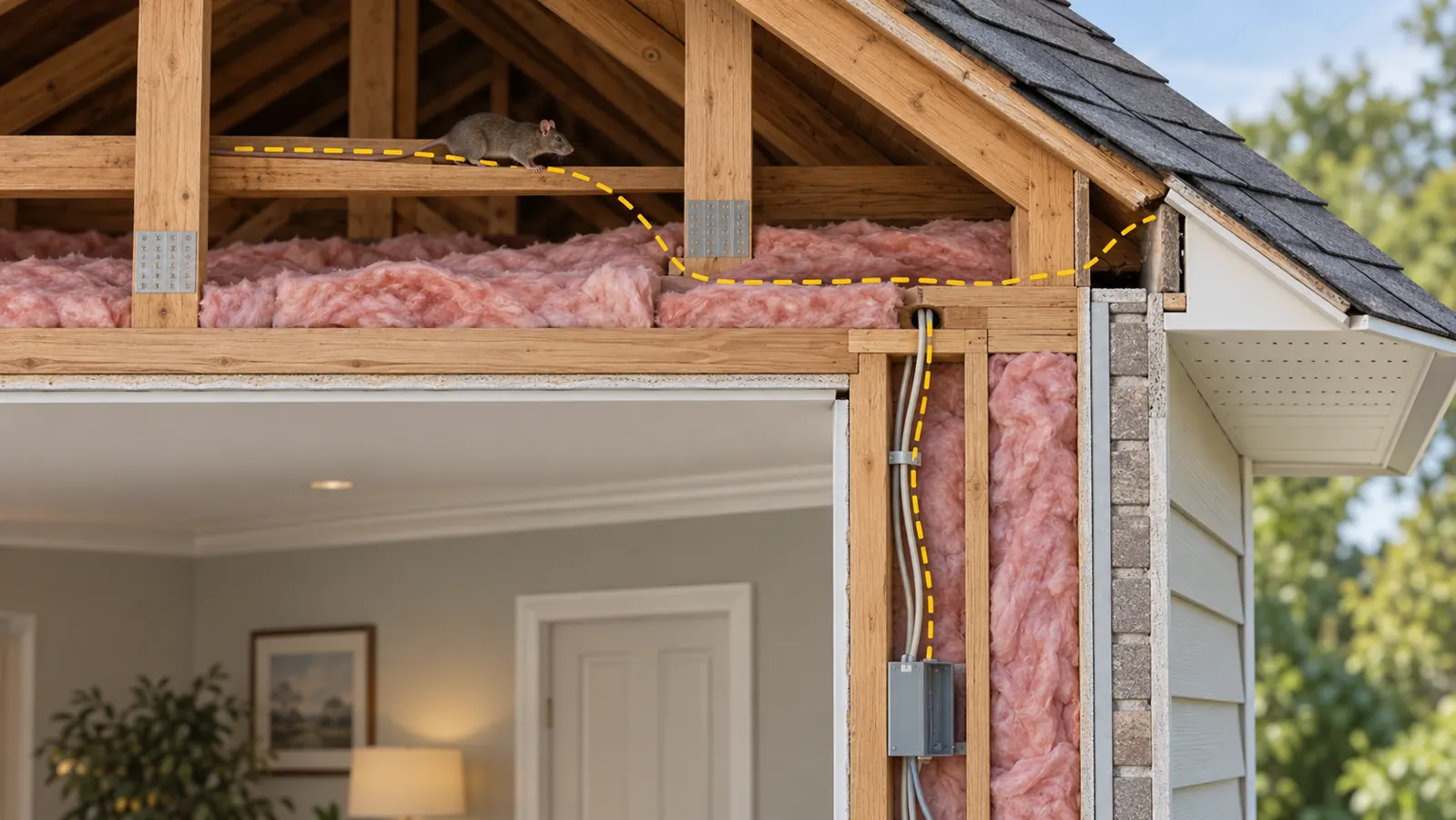
Common signs of rodents in your house include droppings, gnaw marks, nesting material, rub marks and repeated scratching in the attic or walls. Sounds alone cannot identify the animal. An inspection should connect physical evidence with the openings that allow entry.
Act early. Rodents can contaminate stored food and surfaces, damage insulation, and gnaw materials including wiring. The safest response is to document the evidence, avoid stirring contaminated dust, and arrange an inspection that addresses both the animals and the building.
Seven signs that deserve attention
- Fresh droppings in cabinets, attics, garages, pantries, or along walls
- Scratching, running, or gnawing sounds, especially after dark
- Rub or grease marks along repeated travel routes
- Shredded paper, insulation, fabric, or plant material used for nests
- Gnaw marks on food packaging, wood, plastic, or wiring
- A persistent musky or urine-like odor
- Pet attention focused on a wall, cabinet, ceiling, or appliance
Fresh evidence after an area has been properly cleaned is more useful than an old dropping found behind stored items. Photograph the pattern before cleanup so the inspector can see where activity was concentrated.
Rats and mice leave different patterns
Mice can use very small gaps and often explore close to walls, stored food, and clutter. Rats are larger and may use rooflines, tree limbs, fences, crawl spaces, damaged vents, and utility routes. Dropping size and shape can help, but photographs online are not a substitute when health or treatment decisions depend on the identification.
The inspection should also consider whether the sound is coming from a rodent at all. Daytime movement near a roof edge may suggest a different animal than small, repeated nighttime noises in a kitchen wall.
Common attic and wall entry routes
- Gaps at roof returns, fascia, soffits, and eaves
- Unscreened or damaged roof, gable, and foundation vents; damaged dryer-vent covers
- Openings around plumbing, electrical, cable, and air-conditioning lines
- Garage-door corners and worn weather seals
- Crawl-space doors, foundation gaps, and damaged screens
- Tree limbs or vines that provide easy access to the roof
Seal work must use durable materials appropriate for the building. Before closing an opening, determine whether animals are still inside; trapping and exclusion must be coordinated so rodents are not trapped in inaccessible spaces.
What not to do with droppings
Do not sweep or vacuum dry rodent urine or droppings. The CDC advises wetting contaminated material with disinfectant, allowing the stated contact time, then wiping it up while wearing gloves. Larger or heavily contaminated areas can require additional precautions.
Keep children and pets away from the area. If anyone is bitten, exposed to heavy contamination, or develops concerning symptoms after rodent exposure, contact a medical professional or local public-health authority rather than relying on pest-control guidance alone.
Why traps are only part of the solution
Traps can remove individual rodents, but they do not close the hole, remove food and water, or correct dense clutter. Poor placement may also miss travel routes. Control usually combines identification, population reduction, exclusion, sanitation, and follow-up monitoring.
BugMan’s rodent-control service is designed to inspect for entry and activity, then recommend the right combination for the property.
What to record before the appointment
- Write down the rooms and times where noises occur.
- Photograph droppings, gnawing, tracks, or damaged food packages.
- Note recent roof, plumbing, HVAC, or remodeling work.
- List pet-food, bird-seed, feed, garbage, or bulk-food storage locations.
- Tell the technician about traps, bait, or poison already used.
Urgent electrical concern
If you see damaged or exposed wiring, avoid touching it and contact a qualified electrician. Pest removal does not replace electrical inspection or repair.
What the sounds and signs may mean
| Evidence | Possible interpretation | What to inspect next |
|---|---|---|
| Light scratching at night | Mouse or small rodent travel | Kitchen walls, attic edges, cabinets, utility routes |
| Heavier running overhead | Rat or wildlife movement | Roofline, soffits, tree access, attic insulation |
| Daytime roof noise | Squirrel, bird, or other wildlife possible | Exterior roof and entry observation |
| Droppings in cabinets | Active food-route access | Plumbing gaps, pantry storage, appliance voids |
| Gnawed wiring or packaging | Established route and property risk | Electrical inspection, food storage, nearby harborage |
| Strong odor without sightings | Urine, nest, carcass, or another building issue | Void, attic, appliance, drain, and HVAC evaluation |
This table narrows the inspection but does not identify the animal with certainty. Avoid poison or exclusion decisions until the likely species and route are clearer.
Clues that help distinguish rats from mice
Dropping size, gnaw width, track size, food damage, and travel height can help. Roof rats may use upper routes and tree access. Mice can exploit very small gaps and nest close to food. Norway rats are more associated with ground, burrows, foundations, and lower levels, though buildings rarely follow a perfect textbook pattern.
- Photograph droppings beside a ruler without handling them
- Record which foods or materials were damaged
- Note whether sounds move through walls or stay in one ceiling area
- Check whether evidence returns after safe cleaning
- Tell the inspector about recent roofing, utility, landscaping, or storm work
When rodent evidence becomes urgent
Gnawed or exposed wiring requires an electrician. Droppings in food preparation, childcare, medical, or commercial areas require prompt containment and sanitation. Heavy contamination or material inside ventilation equipment may need specialized cleanup.
Do not sweep or vacuum dry droppings. Do not seal a suspected active route without planning animal removal. Do not place accessible poison where children, pets, or wildlife can reach it.
Record recurring noises from a safe location
Record a short clip from a safe occupied room when the noise occurs, and note the time, room, and where it seems loudest. State whether it happened once or has repeated. Do not open a wall, climb into the attic, or strike the ceiling to provoke another sound. An undisturbed recording and a simple timeline are more useful than an attempt to chase the source through the house.
Also note ordinary building events occurring at the same time, such as heating or cooling equipment cycling, wind, rain, or someone using plumbing. These observations do not rule animals in or out. They give the inspector a way to compare possible sources and decide which accessible areas deserve closer examination.
Frequently asked questions
Are attic noises always rats or mice?
No. Birds, squirrels, bats, and building movement can sound similar. Time of day, entry points, droppings, and other physical evidence help identify the source.
Can I seal every hole immediately?
Do not seal blindly when animals may still be inside. Inspection, removal, and exclusion should be sequenced to avoid trapping animals in the structure.
What if I find only one dropping?
Document it and inspect the surrounding area. One old dropping does not prove current activity, but fresh evidence returning after safe cleanup indicates an active issue.
Do rats leave grease marks?
Repeated travel can leave dark rub marks along edges, but dirt, moisture, or other causes can look similar. Combine the mark with droppings, tracks, gnawing, and monitoring.
Can rodents move between attached townhomes or apartments?
Yes. Shared attics, walls, rooflines, utilities, and crawl spaces can allow movement. Building-level inspection may be necessary.
Should I call pest control or an electrician first for gnawed wires?
Keep away from damaged wiring and contact a qualified electrician for the electrical hazard. Rodent control and exclusion should proceed in coordination.
Related reading
- Professional rodent control
- Lumberton pest-control services
- Common rodent entry points around the home
- Contact BugMan
Sources and further reading
Hearing movement in the attic or walls?
Tell BugMan when the noise occurs and where you hear it. Photographs of droppings or damage, along with a short recording, can help us prepare for the inspection. Call (409) 333-9165 or request a free estimate.
Have a pest concern? Let’s take a look.
Request a free initial inspection.
Tell us what you’re seeing and our local team will help you choose the right next step. Serving Beaumont, Nederland, Lumberton, Buna, and surrounding Southeast Texas communities.
Prefer to call? (409) 333-9165


General Pest Control Services
Termite Treatment & Prevention
Crawfish Treatment
Rodent Control
Roach Control
Bee Removal
Mosquito Control
Flea & Tick Control
Ant & Wasp Control
Residential Pest Control
Commercial Pest Control
2026 Bug Man Pest & Termite Control © - Site by: 414 Creative


